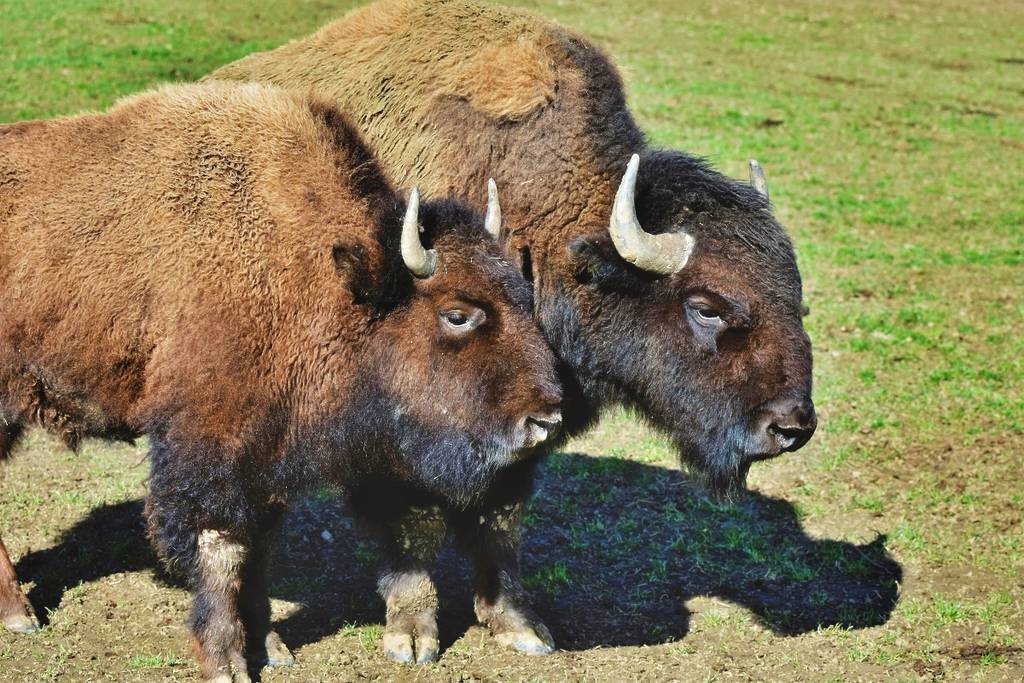

The American bison has begun breeding again in Mexico after having disappeared from the country approximately 200 years ago. And yes: 23 new calves have already been born in the northern part of the country.
According to information shared by the Ministry of the Environment and Natural Resources (Semarnat), the reintroduction program for this species in Sonora is showing positive results, particularly in terms of adaptation and reproduction.
The new calves were recorded during the first 20 days of the current calving season in the Rancho Uno and San Bernardino areas, two management zones located in northern Sonora.
The Return of the American Bison to Northern Mexico
The American bison is considered one of the largest land mammals on the continent and for centuries inhabited various regions of northern Mexico. However, hunting and habitat loss led to its disappearance from the wild within the country.
Now, two centuries later, the birth of these calves represents a significant step forward in the ecological restoration efforts promoted by environmental authorities and conservation programs.
According to Semarnat, projections indicate that up to 40 births could be recorded this year, a figure that would serve as a measure of the success of the species’ recovery program.
Where are the bison born in Mexico?
The animals are located in Sonora, specifically in the Rancho Uno and San Bernardino conservation areas, where specialists conduct regular patrols and monitoring to assess the population’s development.
Although the American bison is usually associated more with the United States, historically it was also part of the ecosystems of northern Mexico, making this return an important milestone for the region’s wildlife.